SKU:DROS-9052-GE
Drosera Rotundifolia (Sundew)
Drosera Rotundifolia (Sundew)
Drosera rotundifolia is a naturally occurring species rather than a registered cultivar. Commonly known as the Round-leaved Sundew, it is one of the most widespread carnivorous plants in the world, occurring across Europe, Asia and North America. The species was formally described by Carl Linnaeus in 1753 and has long served as one of the best-known representatives of the genus Drosera. It inhabits nutrient-poor sphagnum bogs, peatlands and wet heath environments where its carnivorous adaptations allow it to supplement nutrition through insect capture.
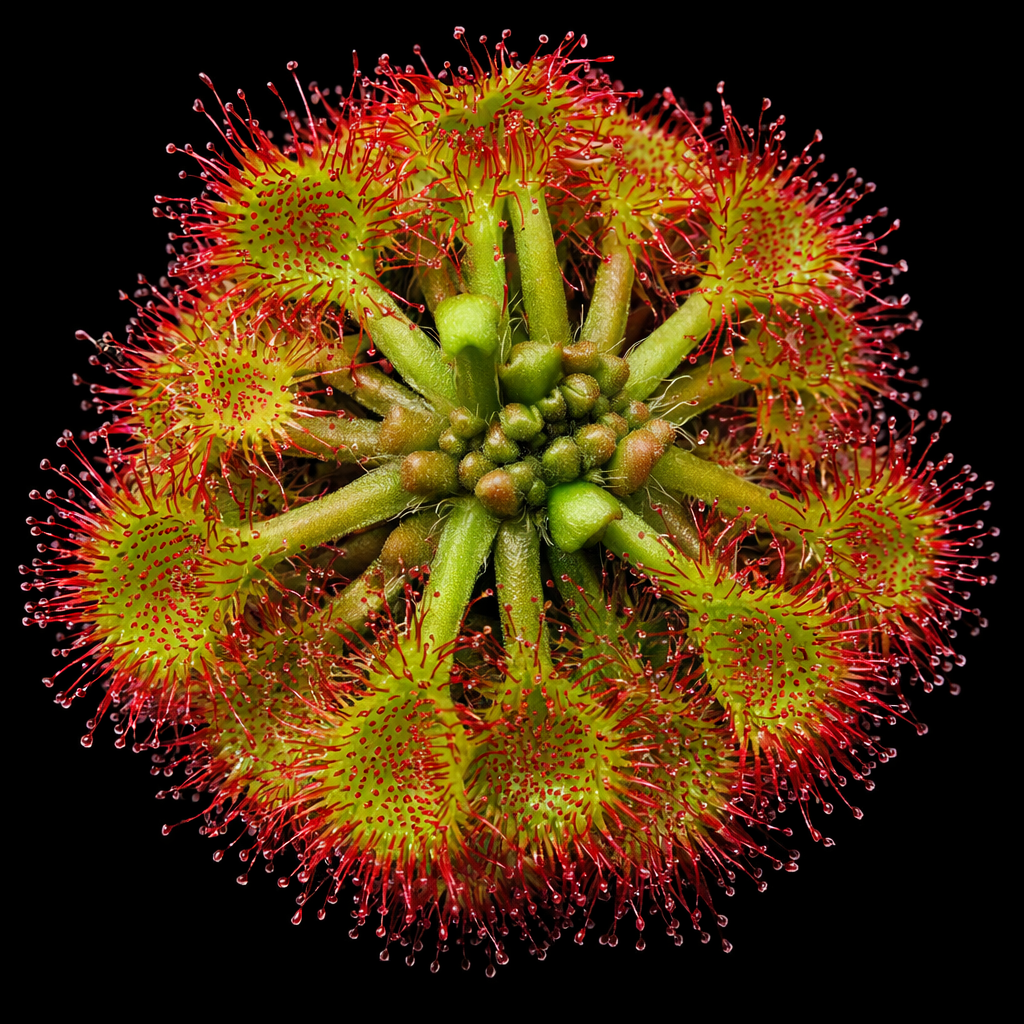
This species forms a compact basal rosette of distinctive rounded leaves borne on slender petioles. Each leaf is densely covered with glandular tentacles tipped with glistening mucilage droplets that resemble dew in sunlight. These sticky secretions attract and trap small insects, while surrounding tentacles gradually curl inward to increase contact with captured prey. During the growing season, plants produce delicate white flowers on tall, slender scapes that elevate the blooms well above the trapping foliage. Foliage colouration ranges from bright green to deep red depending on light intensity, with plants often developing particularly vibrant pigmentation under strong illumination.
Drosera rotundifolia is notable for its exceptional cold tolerance and broad natural distribution. Unlike tropical sundews, it undergoes a pronounced winter dormancy and survives unfavourable conditions by forming a compact resting bud known as a hibernaculum. This adaptation allows the species to persist in regions experiencing prolonged freezing temperatures. Its ecological significance, ease of recognition and important role in carnivorous plant research have made it a cornerstone species for both botanical collections and conservation efforts. Seed-grown plants remain remarkably consistent in appearance, making the species highly valued by growers interested in temperate carnivorous plants.
Origin: Europe, Asia and North America
Discoverer / Authority: Carl Linnaeus
Year Described: 1753
Cultivar Registration: Not applicable (natural species)
Plant Type: Temperate carnivorous perennial
Genus: Drosera
Species: rotundifolia
Growth Habit: Compact rosette-forming sundew
Trap Type: Flypaper trap with glandular tentacles
Flowers: White flowers on tall scapes
Dormancy: Winter dormancy required; forms a hibernaculum
Propagation: Seed, division and tissue culture
What's Included: One or More healthy Drosera rotundifolia growing in its nursery container.
A tissue culture plants are grown in clear gel, transparent container that holds multiple young plants (typically 3 or more) grown under laboratory conditions.
Our Gel Cup are non-sterile gel media that we use for start the hardening process after a plant has been in tissue culture.These vessels provide a carefully controlled environment, keeping the plants healthy as the get ready to transition to standard growing conditions.
Quick Hardening Steps:
- Open Lid Gradually: Slightly open the cup to slowly reduce humidity.
- Maintain Humidity: Gradually decrease humidity over 2–4 weeks.
- Indirect Light: Start with gentle, indirect lighting.
- Moist Soil: Keep media damp, never wet.
- Monitor Closely: Slowly increase airflow and light exposure.

Each transparent Transition Cup (5 cm diameter × 7 cm height) contains a juvenile carnivorous plant that has moved beyond sterile tissue culture and into a structured transition medium.
Inside, you’ll find a young carnivorous plant securely planted in a semi-solid blend designed to support root development while easing the shift from gel to soil.
This carefully balanced environment maintains optimal humidity and airflow, helping reduce transplant shock and supporting the plant during this critical transition stage.
Suitable for both novice growers and experienced collectors, Transition Cups provide a reliable, low-stress way to guide delicate carnivorous plants toward successful soil establishment.
Each transparent carnivorous cup (5 cm diameter x 7 cm height) contains a juvenile carnivorous plant freshly transitioned from tissue culture.
Inside, you'll find a young carnivorous plant planted securely in special growing media soil that replicates their natural habitat.
This carefully balanced environment maintains optimal humidity, aiding the delicate plants during their crucial hardening-off stage.
Perfect for both novice growers and experienced collectors, these cups provide a simple and effective way to cultivate and enjoy captivating insect-eating plants.
Couldn't load pickup availability
Drosera rotundifolia is a naturally occurring species rather than a registered cultivar. Commonly known as the Round-leaved Sundew, it is one of the most widespread carnivorous plants in the world, occurring across Europe, Asia and North America. The species was formally described by Carl Linnaeus in 1753 and has long served as one of the best-known representatives of the genus Drosera. It inhabits nutrient-poor sphagnum bogs, peatlands and wet heath environments where its carnivorous adaptations allow it to supplement nutrition through insect capture.
This species forms a compact basal rosette of distinctive rounded leaves borne on slender petioles. Each leaf is densely covered with glandular tentacles tipped with glistening mucilage droplets that resemble dew in sunlight. These sticky secretions attract and trap small insects, while surrounding tentacles gradually curl inward to increase contact with captured prey. During the growing season, plants produce delicate white flowers on tall, slender scapes that elevate the blooms well above the trapping foliage. Foliage colouration ranges from bright green to deep red depending on light intensity, with plants often developing particularly vibrant pigmentation under strong illumination.
Drosera rotundifolia is notable for its exceptional cold tolerance and broad natural distribution. Unlike tropical sundews, it undergoes a pronounced winter dormancy and survives unfavourable conditions by forming a compact resting bud known as a hibernaculum. This adaptation allows the species to persist in regions experiencing prolonged freezing temperatures. Its ecological significance, ease of recognition and important role in carnivorous plant research have made it a cornerstone species for both botanical collections and conservation efforts. Seed-grown plants remain remarkably consistent in appearance, making the species highly valued by growers interested in temperate carnivorous plants.
Origin: Europe, Asia and North America
Discoverer / Authority: Carl Linnaeus
Year Described: 1753
Cultivar Registration: Not applicable (natural species)
Plant Type: Temperate carnivorous perennial
Genus: Drosera
Species: rotundifolia
Growth Habit: Compact rosette-forming sundew
Trap Type: Flypaper trap with glandular tentacles
Flowers: White flowers on tall scapes
Dormancy: Winter dormancy required; forms a hibernaculum
Propagation: Seed, division and tissue culture
What's Included: One or More healthy Drosera rotundifolia growing in its nursery container.
A tissue culture plants are grown in clear gel, transparent container that holds multiple young plants (typically 3 or more) grown under laboratory conditions.
Our Gel Cup are non-sterile gel media that we use for start the hardening process after a plant has been in tissue culture.These vessels provide a carefully controlled environment, keeping the plants healthy as the get ready to transition to standard growing conditions.
Quick Hardening Steps:
- Open Lid Gradually: Slightly open the cup to slowly reduce humidity.
- Maintain Humidity: Gradually decrease humidity over 2–4 weeks.
- Indirect Light: Start with gentle, indirect lighting.
- Moist Soil: Keep media damp, never wet.
- Monitor Closely: Slowly increase airflow and light exposure.
Each transparent Transition Cup (5 cm diameter × 7 cm height) contains a juvenile carnivorous plant that has moved beyond sterile tissue culture and into a structured transition medium.
Inside, you’ll find a young carnivorous plant securely planted in a semi-solid blend designed to support root development while easing the shift from gel to soil.
This carefully balanced environment maintains optimal humidity and airflow, helping reduce transplant shock and supporting the plant during this critical transition stage.
Suitable for both novice growers and experienced collectors, Transition Cups provide a reliable, low-stress way to guide delicate carnivorous plants toward successful soil establishment.
Each transparent carnivorous cup (5 cm diameter x 7 cm height) contains a juvenile carnivorous plant freshly transitioned from tissue culture.
Inside, you'll find a young carnivorous plant planted securely in special growing media soil that replicates their natural habitat.
This carefully balanced environment maintains optimal humidity, aiding the delicate plants during their crucial hardening-off stage.
Perfect for both novice growers and experienced collectors, these cups provide a simple and effective way to cultivate and enjoy captivating insect-eating plants.