SKU:ANOE-5432-(S
Anoectochilus lylei 'Brown' (Jewel Orchid)
Anoectochilus lylei 'Brown' (Jewel Orchid)
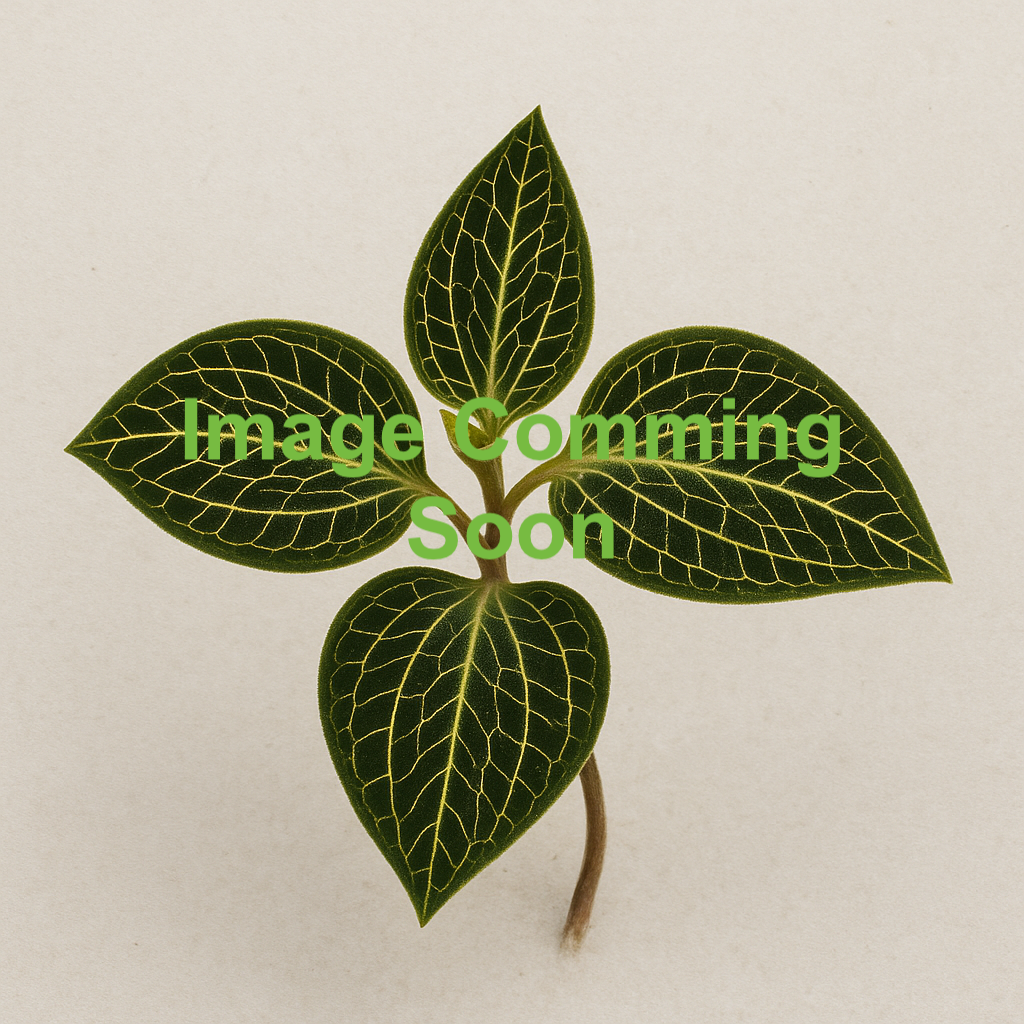
A richly toned and understated jewel orchid, Anoectochilus lylei ‘Brown’ forms a low, creeping cluster of soft, velvety leaves that hug the surface of the growing medium. The foliage is distinctly darker than most jewel orchids, displaying deep chocolate-brown to bronze hues with subtle undertones of olive or burgundy depending on the light.
Each leaf is oval to slightly elongated, with a plush, matte texture that absorbs light rather than reflecting it—giving the plant a soft, almost suede-like appearance. Running across this dark canvas is a delicate network of fine veins in copper, bronze, or muted gold tones. Unlike the bold contrast seen in brighter varieties, the venation here is more subdued and refined, blending gently into the leaf surface while still catching the light at certain angles.
The overall effect is one of warmth and depth, with the foliage appearing layered and almost iridescent in soft lighting. The leaves are arranged along short, creeping stems, gradually forming a dense, carpet-like colony that spreads slowly over time.
When flowering, slender spikes emerge above the foliage, bearing small, pale flowers—typically white with subtle markings. These blooms are modest and secondary to the plant’s foliage, which remains the primary visual feature.
Anoectochilus lylei ‘Brown’ carries a more earthy, subdued elegance compared to brighter jewel orchids—its beauty lies in its deep tones, soft texture, and quietly intricate veining, making it a refined addition to shaded displays and terrariums.
Country of Origin: Southeast Asia
Temperature: 18–26 °C. Avoid cold drafts and temperatures below 12 °C.
Care: Easy (with minor attention to humidity)
Light: Low to medium indirect light (they’re understory plants in nature).
Humidity: Prefer moderate to high humidity (50–80%), but can adapt to typical indoor levels if not too dry.
A tissue culture vessel is a clear gel, transparent container (5 cm diameter x 7 cm height) that holds multiple young plants (typically 3 or more) grown under laboratory conditions.
These vessels provide a carefully controlled environment, keeping the plants healthy and contaminant-free until they're ready to transition to standard growing conditions.
Quick Hardening Steps:
- Open Lid Gradually: Slightly open the cup to slowly reduce humidity.
- Maintain Humidity: Gradually decrease humidity over 2–4 weeks.
- Indirect Light: Start with gentle, indirect lighting.
- Moist Soil: Keep media damp, never wet.
- Monitor Closely: Slowly increase airflow and light exposure.
Each transparent Transition Cup (5 cm diameter × 7 cm height) contains a juvenile carnivorous plant that has moved beyond sterile tissue culture and into a structured transition medium.
Inside, you’ll find a young carnivorous plant securely planted in a semi-solid blend designed to support root development while easing the shift from gel to soil.
This carefully balanced environment maintains optimal humidity and airflow, helping reduce transplant shock and supporting the plant during this critical transition stage.
Suitable for both novice growers and experienced collectors, Transition Cups provide a reliable, low-stress way to guide delicate carnivorous plants toward successful soil establishment.
Each transparent carnivorous cup (5 cm diameter x 7 cm height) contains a juvenile carnivorous plant freshly transitioned from tissue culture.
Inside, you'll find a young carnivorous plant planted securely in special growing media soil that replicates their natural habitat.
This carefully balanced environment maintains optimal humidity, aiding the delicate plants during their crucial hardening-off stage.
Perfect for both novice growers and experienced collectors, these cups provide a simple and effective way to cultivate and enjoy captivating insect-eating plants.
Couldn't load pickup availability
A richly toned and understated jewel orchid, Anoectochilus lylei ‘Brown’ forms a low, creeping cluster of soft, velvety leaves that hug the surface of the growing medium. The foliage is distinctly darker than most jewel orchids, displaying deep chocolate-brown to bronze hues with subtle undertones of olive or burgundy depending on the light.
Each leaf is oval to slightly elongated, with a plush, matte texture that absorbs light rather than reflecting it—giving the plant a soft, almost suede-like appearance. Running across this dark canvas is a delicate network of fine veins in copper, bronze, or muted gold tones. Unlike the bold contrast seen in brighter varieties, the venation here is more subdued and refined, blending gently into the leaf surface while still catching the light at certain angles.
The overall effect is one of warmth and depth, with the foliage appearing layered and almost iridescent in soft lighting. The leaves are arranged along short, creeping stems, gradually forming a dense, carpet-like colony that spreads slowly over time.
When flowering, slender spikes emerge above the foliage, bearing small, pale flowers—typically white with subtle markings. These blooms are modest and secondary to the plant’s foliage, which remains the primary visual feature.
Anoectochilus lylei ‘Brown’ carries a more earthy, subdued elegance compared to brighter jewel orchids—its beauty lies in its deep tones, soft texture, and quietly intricate veining, making it a refined addition to shaded displays and terrariums.
Country of Origin: Southeast Asia
Temperature: 18–26 °C. Avoid cold drafts and temperatures below 12 °C.
Care: Easy (with minor attention to humidity)
Light: Low to medium indirect light (they’re understory plants in nature).
Humidity: Prefer moderate to high humidity (50–80%), but can adapt to typical indoor levels if not too dry.
A tissue culture vessel is a clear gel, transparent container (5 cm diameter x 7 cm height) that holds multiple young plants (typically 3 or more) grown under laboratory conditions.
These vessels provide a carefully controlled environment, keeping the plants healthy and contaminant-free until they're ready to transition to standard growing conditions.
Quick Hardening Steps:
- Open Lid Gradually: Slightly open the cup to slowly reduce humidity.
- Maintain Humidity: Gradually decrease humidity over 2–4 weeks.
- Indirect Light: Start with gentle, indirect lighting.
- Moist Soil: Keep media damp, never wet.
- Monitor Closely: Slowly increase airflow and light exposure.
Each transparent Transition Cup (5 cm diameter × 7 cm height) contains a juvenile carnivorous plant that has moved beyond sterile tissue culture and into a structured transition medium.
Inside, you’ll find a young carnivorous plant securely planted in a semi-solid blend designed to support root development while easing the shift from gel to soil.
This carefully balanced environment maintains optimal humidity and airflow, helping reduce transplant shock and supporting the plant during this critical transition stage.
Suitable for both novice growers and experienced collectors, Transition Cups provide a reliable, low-stress way to guide delicate carnivorous plants toward successful soil establishment.
Each transparent carnivorous cup (5 cm diameter x 7 cm height) contains a juvenile carnivorous plant freshly transitioned from tissue culture.
Inside, you'll find a young carnivorous plant planted securely in special growing media soil that replicates their natural habitat.
This carefully balanced environment maintains optimal humidity, aiding the delicate plants during their crucial hardening-off stage.
Perfect for both novice growers and experienced collectors, these cups provide a simple and effective way to cultivate and enjoy captivating insect-eating plants.