

SKU:NEPE-0025-S
Nepenthes fusca
Nepenthes fusca
This highland pitcher plant produces long, slender pitchers that range from green to a rich bronze-red, often dusted with speckled markings. Each pitcher narrows gracefully toward the lid, which curves delicately over the opening like a protective canopy. The interior of the pitcher glistens with nectar, drawing in insects, while its elongated, dusky-toned body gives the plant a strikingly elegant appearance. Growing in a compact rosette in its early stages, this tropical carnivore displays vibrant green leaves that contrast beautifully with its darker pitchers, making it a unique centerpiece for any plant collection.
Country of Origin: Southeast Asia (mainly mountainous regions of Borneo, Sumatra, Philippines, and Papua New Guinea)
Temperature: Day: 20–26 °C (68–78 °F) | Night: 10–15 °C (50–59 °F) – night drop is essential
Care: Moderate to Difficult (requires cooler conditions and temperature drops at night)
Light: Bright indirect light to full sun
Humidity: High (60–90%)
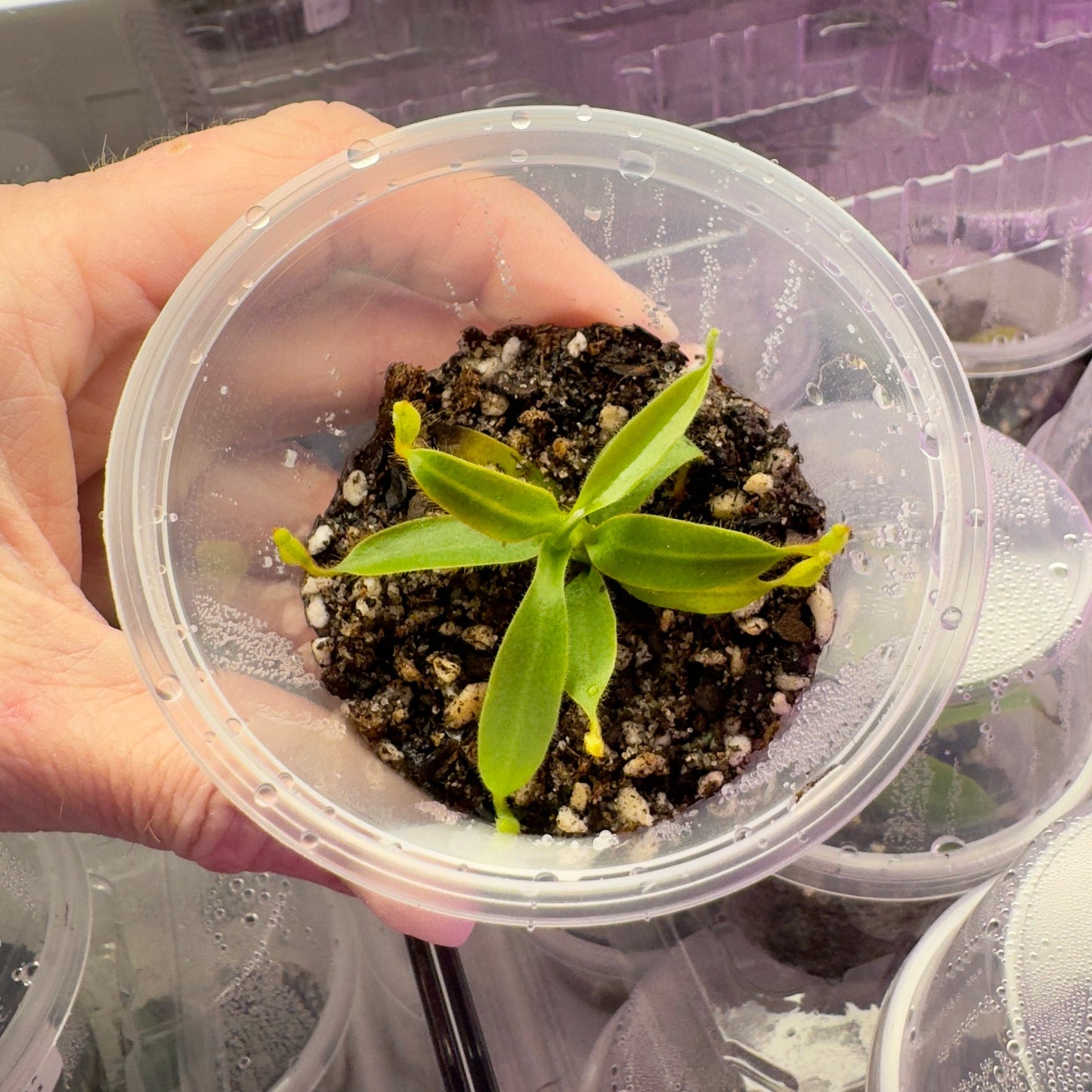
Each transparent carnivorous cup (5 cm diameter x 7 cm height) contains a juvenile carnivorous plant freshly transitioned from tissue culture.
Inside, you'll find a young carnivorous plant planted securely in special growing media soil that replicates their natural habitat.
This carefully balanced environment maintains optimal humidity, aiding the delicate plants during their crucial hardening-off stage.
Perfect for both novice growers and experienced collectors, these cups provide a simple and effective way to cultivate and enjoy captivating insect-eating plants.
A tissue culture vessel is a sterile, transparent container (5 cm diameter x 7 cm height) that holds multiple young plants (typically 3 or more) grown under laboratory conditions.
These vessels provide a carefully controlled environment, keeping the plants healthy and contaminant-free until they're ready to transition to standard growing conditions.
Quick Hardening Steps:
- Open Lid Gradually: Slightly open the cup to slowly reduce humidity.
- Maintain Humidity: Gradually decrease humidity over 2–4 weeks.
- Indirect Light: Start with gentle, indirect lighting.
- Moist Soil: Keep media damp, never wet.
- Monitor Closely: Slowly increase airflow and light exposure.
Couldn't load pickup availability
This highland pitcher plant produces long, slender pitchers that range from green to a rich bronze-red, often dusted with speckled markings. Each pitcher narrows gracefully toward the lid, which curves delicately over the opening like a protective canopy. The interior of the pitcher glistens with nectar, drawing in insects, while its elongated, dusky-toned body gives the plant a strikingly elegant appearance. Growing in a compact rosette in its early stages, this tropical carnivore displays vibrant green leaves that contrast beautifully with its darker pitchers, making it a unique centerpiece for any plant collection.
Country of Origin: Southeast Asia (mainly mountainous regions of Borneo, Sumatra, Philippines, and Papua New Guinea)
Temperature: Day: 20–26 °C (68–78 °F) | Night: 10–15 °C (50–59 °F) – night drop is essential
Care: Moderate to Difficult (requires cooler conditions and temperature drops at night)
Light: Bright indirect light to full sun
Humidity: High (60–90%)
Each transparent carnivorous cup (5 cm diameter x 7 cm height) contains a juvenile carnivorous plant freshly transitioned from tissue culture.
Inside, you'll find a young carnivorous plant planted securely in special growing media soil that replicates their natural habitat.
This carefully balanced environment maintains optimal humidity, aiding the delicate plants during their crucial hardening-off stage.
Perfect for both novice growers and experienced collectors, these cups provide a simple and effective way to cultivate and enjoy captivating insect-eating plants.
A tissue culture vessel is a sterile, transparent container (5 cm diameter x 7 cm height) that holds multiple young plants (typically 3 or more) grown under laboratory conditions.
These vessels provide a carefully controlled environment, keeping the plants healthy and contaminant-free until they're ready to transition to standard growing conditions.
Quick Hardening Steps:
- Open Lid Gradually: Slightly open the cup to slowly reduce humidity.
- Maintain Humidity: Gradually decrease humidity over 2–4 weeks.
- Indirect Light: Start with gentle, indirect lighting.
- Moist Soil: Keep media damp, never wet.
- Monitor Closely: Slowly increase airflow and light exposure.